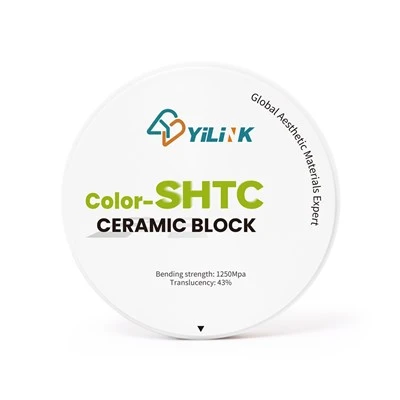
Hey there! As a dental glass ceramic supplier, I often get asked about the radioopacity of dental glass ceramic. So, let’s dive right into it and break down what radioopacity actually means in the dental context and why it’s a big deal for us in the game. Dental Glass Ceramic
What’s Radioopacity Anyway?
First things first, radioopacity is all about how well a material shows up on an X – ray. You know how on an X – ray, you can see your bones which look white, and the softer tissues are more grayish or black? That’s because different materials have different levels of radioattenuation, which is just a fancy way of saying they absorb X – rays to different degrees. When a material is radioopaque, it blocks more X – rays from passing through, and as a result, it shows up as a bright area on the X – ray image.
In the dental world, we use X – rays a ton. Dentists rely on them to diagnose all sorts of issues, like cavities, bone loss, and problems with dental restorations. So, if a dental material like our glass ceramic doesn’t show up well on an X – ray, it’s gonna be a real pain in the… well, you know.
Why Radioopacity Matters for Dental Glass Ceramic
Now, let’s talk about why radioopacity is so important for dental glass ceramic. For starters, when a dentist places a glass ceramic restoration, like a crown or a veneer, they need to be able to see how it’s sitting in the mouth. Are there any gaps between the restoration and the tooth? Is the fit just right? Without proper radioopacity, it can be super hard to tell.
Another reason is that it helps with long – term monitoring. Over time, the gums and bones around a dental restoration can change. By having a radioopaque glass ceramic, dentists can track these changes on X – rays. They can see if there’s any bone loss or if the restoration is causing any problems that aren’t visible to the naked eye.
Plus, in cases where multiple dental restorations are used, being able to distinguish between different materials on an X – ray is crucial. Imagine a patient has a few glass ceramic crowns and some metal fillings. If the glass ceramic isn’t radioopaque, it might blend in with the natural tooth structure on the X – ray, making it difficult to evaluate the overall dental situation.
How Radioopacity is Achieved in Dental Glass Ceramic
We, as a dental glass ceramic supplier, take radioopacity seriously. There are a few ways we can make our glass ceramic radioopaque. One common method is to add certain elements to the ceramic composition. Elements like barium, strontium, and zirconium are known to increase radioopacity.
These elements work by interacting with the X – rays. When the X – rays hit the glass ceramic containing these elements, they get absorbed or scattered, preventing them from passing straight through to the X – ray detector. This makes the glass ceramic appear brighter on the X – ray.
But it’s not as simple as just adding these elements willy – nilly. We have to find the right balance. Adding too many of these radio – dense elements can affect other properties of the glass ceramic, like its strength, aesthetics, and biocompatibility. So, it’s a bit of a science experiment to get it just right.
Measuring Radioopacity
There are specific ways to measure the radioopacity of dental glass ceramic. One standard method is to compare it to a known reference material, usually aluminum. The radioopacity of a material is often expressed as the equivalent thickness of aluminum. For example, if a dental glass ceramic has a radioopacity equivalent to 3 mm of aluminum, it means that it blocks X – rays about as well as a 3 – mm thick piece of aluminum.
In the dental industry, there are also standards and guidelines for the minimum radioopacity that dental materials should have. This is to ensure that they are visible enough on X – rays for accurate diagnosis and evaluation.
Benefits of Our Radioopaque Dental Glass Ceramic
As a supplier, we know that our radioopaque dental glass ceramic has a lot of benefits. For dentists, it makes their job easier. They can have more confidence in placing and monitoring restorations, knowing that they’ll be able to see exactly what’s going on inside the patient’s mouth.
For patients, it means better dental care. Since doctors can get a more accurate picture of the dental situation, they can make better treatment decisions, leading to more successful and long – lasting restorations.
From an aesthetic point of view, our glass ceramic still looks great. Even with the added radio – dense elements, we’ve managed to keep the natural – looking translucency and color that patients love. So, you don’t have to sacrifice looks for functionality.
Challenges and Future Developments
Of course, there are always challenges. One challenge is keeping up with the ever – changing standards and requirements in the dental industry. As technology advances and new research comes out, the expectations for radioopacity and other properties of dental materials are constantly evolving.
Another challenge is educating the market. Some dentists might not fully understand the importance of radioopacity in dental glass ceramic. We need to do a better job of explaining why it matters and how our product can meet their needs.
Looking to the future, we’re always exploring new ways to improve the radioopacity of our glass ceramic. Maybe there are new elements or manufacturing techniques that we can use to make it even more visible on X – rays without compromising other properties.
Conclusion

So, there you have it. The radioopacity of dental glass ceramic is a pretty important thing in the dental world. It helps dentists diagnose and treat patients better, and it gives patients more confidence in their dental restorations. As a dental glass ceramic supplier, we’re committed to providing high – quality products with the right level of radioopacity.
Porcelain Furnace If you’re a dentist or a dental professional looking for a reliable dental glass ceramic supplier, we’d love to hear from you. We can provide you with samples and more information about our products. Whether you’re working on a small restoration or a complex full – mouth rehabilitation, our radioopaque dental glass ceramic can be a great choice. Get in touch with us to start the conversation and see how we can meet your dental material needs.
References
- Craig’s Restorative Dental Materials, 14th Edition
- Sturdevant’s Art and Science of Operative Dentistry, 6th Edition
Yilink (Tianjin) Biotechnology Co., Ltd.
Yilink (Tianjin) Biotechnology Co., Ltd. is one of the most professional dental glass ceramic manufacturers and suppliers in China, also supports customized service. Welcome to buy discount dental glass ceramic in stock here and get pricelist from our factory. Quality products and low price are available.
Address: No. 9, Kaituo Road, Balitai Town, Jinnan District, Tianjin
E-mail: service@yilink-dental.com
WebSite: https://www.yilinkzirconia.com/
