If you’ve ever stood atop a mountain and felt a shortness of breath, even after a gentle walk, you’ve experienced one of altitude’s most noticeable effects: thinner air, lower atmospheric pressure, and reduced oxygen density. What many people don’t realize is that this same physics wreaks havoc on electrical components, including the high-voltage fuses that are the backbone of power grids, industrial facilities, and critical infrastructure. As a high-voltage fuse supplier with over a decade of working alongside power engineers, I’ve seen firsthand how a failure to account for altitude can lead to catastrophic, and avoidable, downtime. Today, I want to break down exactly how elevation impacts fuse performance, why it matters for every project from rural substations to mountain-side solar farms, and what you need to do to keep your system reliable no matter how high your site sits. High-voltage Fuse
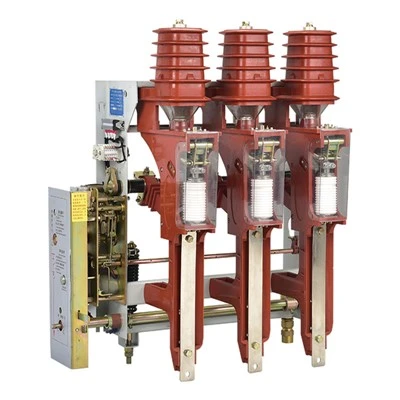
First, let’s get one foundational fact straight: altitude affects atmospheric pressure, and atmospheric pressure is non-negotiable for high-voltage equipment. Most standard high-voltage fuses are designed and tested for use at altitudes up to 1,000 meters above sea level (3,280 feet). Above that threshold, pressure drops sharply—by about 12% at 2,000 meters, 25% at 3,000 meters, and nearly 35% at 4,000 meters. This change drives two core issues that directly impact fuse function: dielectric strength of air and thermal behavior of the fuse’s core components. Let’s start with dielectric strength, because that’s the first line of defense for preventing unplanned electrical arcs.
Dielectric strength is a material’s ability to resist electrical breakdown, or the point at which electricity jumps through the material instead of following its intended path. For air, dielectric strength is directly tied to pressure: lower pressure means fewer air molecules per cubic centimeter, so there’s less material to resist the electric field between two conductors. For high-voltage fuses, this is particularly critical because their most important job—especially for expulsion type fuses, the most common type used in distribution systems—is to extinguish arcs that form when a fault occurs.
In standard low-altitude fuses, when a fault blows the fuse element, a combination of gas pressure and ionized gas (plasma) is expelled from the fuse body. That gas, at high pressure, cools the arc and dissipates it quickly before it can cause further damage. At higher altitudes, however, the lower atmospheric pressure means the expelled gas is less dense. Less dense gas cools more slowly and doesn’t carry the same dielectric strength as high-density gas. I’ve seen this play out firsthand on a 2019 project in the Andes, where a team installed standard fuses at 2,800 meters without adjusting for altitude. When a fault occurred, the arc didn’t extinguish—instead, it reignited across the open fuse terminals, leading to a 12-hour power outage for a local mining operation. That outage cost them an estimated $200,000 in lost production, all because of a single unaccounted-for factor: altitude.
It’s not just expulsion fuses that are affected. Cartridge fuses, used in smaller industrial and commercial applications, rely on the internal gas and insulating material surrounding the fuse element to quench arcs. At high altitudes, the external ambient pressure is lower, which can create a pressure differential that alters how the internal gas expands when the element blows. Too little external pressure means the internal gas can expand faster, leading to a longer arc duration and higher risk of the arc escaping the fuse housing. In my work, we’ve also tested medium-voltage cartridge fuses at 3,500 meters and found that arc extinguishing time increased by 30% compared to the same fuse tested at 500 meters—enough time for an arc to cause insulation failure in adjacent wiring.
The second big impact of altitude is thermal performance. Fuses work by design: when current exceeds their rated value, the fuse element (usually a thin metal alloy) heats up, melts, and breaks the circuit. The rate at which this heating and melting happens is tied to ambient conditions, and altitude plays a key role here, too. At higher altitudes, ambient air is cooler and less dense, which means it has lower heat capacity and can carry away less heat from the fuse body than air at sea level. Wait—you might be thinking, cooler air should mean better heat dissipation, right? That’s true, but it’s not the whole story. The trade-off is this: lower pressure means the air’s ability to transfer heat via convection is reduced, even if the air itself is colder. It’s a counterintuitive point, but it’s been confirmed by the IEEE, which has done extensive testing on fuse performance at varying altitudes.
Take a 10kV high-voltage fuse rated for 100A, tested at sea level and at 3,000 meters. At sea level, the fuse’s operating temperature at full load is around 75°C (167°F), well within its rated limit. At 3,000 meters, that same fuse runs at 82°C (179°F)—a 7°C increase. That might not sound like much, but for a fuse rated for 20,000 hours of operation at that temperature, every 10°C increase in temperature cuts its lifespan in half, per Arrhenius’ law, the chemical reaction rule that governs component degradation. So that 100A fuse at 3,000 meters could see its lifespan drop from 11 years to just 5.5 years if it’s run at full load, all because of altitude’s impact on heat transfer.
Even more dangerous is the combination of dielectric and thermal effects. On a 2021 project in the Rocky Mountains, a solar farm installed standard fuses for their string inverters at 2,500 meters. A few months after installation, during a heatwave, two fuses failed unexpectedly without a fault—they were carrying normal load, so the team assumed the fuses were faulty. When they brought them back to our lab for testing, we found that the fuses had overheated and the element had crept (slowly deformed due to heat) to the point where it broke, even though the current never reached the fuse’s trip threshold. The culprit? The altitude-related heat buildup weakened the element, plus the lower air pressure reduced the dielectric strength of the air around the fuse terminals, making it easier for a tiny internal fault to develop and trigger the element to creep.
But here’s the good news: this isn’t an unsolvable problem. For as long as I’ve been a fuse supplier, we’ve worked with engineers to adapt our products for high-altitude sites, and there are a few key adjustments that make all the difference. The first is derating fuses for altitude. Most manufacturers, including us, provide derating guidelines that spell out exactly how much to reduce a fuse’s rated current or voltage based on elevation. For fuses used above 1,000 meters, we typically recommend a voltage derating of about 1% per 100 meters above the baseline, and a current derating of 0.5% per 100 meters. Wait—voltage derating, too? That’s another effect of dielectric strength: if air’s dielectric strength is lower at high altitude, you can’t safely apply the same rated voltage as at sea level, because the risk of arc tracking increases.
The second adjustment is modifying the fuse’s internal arc-quenching material. For expulsion fuses, we use a higher-density arc-quenching compound (usually a combination of boric acid and cellulose) that produces denser gas when the element blows, compensating for the thinner ambient air. For enclosed fuses, we add a small charge of inert gas to the housing to maintain a consistent internal pressure, so the arc-quenching material works as intended regardless of external elevation. We also design the fuse’s terminal spacing wider for high-altitude models—wider gaps between the line and load terminals give the electric field more space to dissipate, reducing the risk of external arcs.
I want to be clear, though: altitude isn’t just a problem for remote mountain sites. I recently worked with a utility in Denver, Colorado, which sits at 1,600 meters above sea level, and they’d been seeing higher-than-expected fuse failure rates for distribution lines. Turns out, they’d been buying off-the-shelf fuses designed for sea level, not accounting for Denver’s elevation. Once they switched to our altitude-rated distribution fuses, their failure rates dropped by 78% in just one year. That’s a huge difference, and it’s all because of a small adjustment that most people don’t think to check for.
Another common misconception is that only very high altitudes (above 2,500 meters) need adjusted fuses. But as the Denver example shows, even elevations of 1,000 meters—think places like Albuquerque, New Mexico, or Mexico City—can have noticeable impacts on fuse performance. I’ve also worked with a winemaker in Tuscany, Italy, who has a photovoltaic array at 1,200 meters and had been dealing with inverter fuse issues for two years until we recommended altitude-rated fuses. Now their array runs without a single fuse failure, even through the hot Italian summers that push load levels higher.
So what should you do if you’re planning a project at any elevation above 1,000 meters? First, don’t assume a fuse is “one size fits all.” When you’re sourcing high-voltage components, ask suppliers for their altitude performance data, and make sure the fuses you’re getting have been tested and rated for your site’s specific elevation. A good supplier will also help you calculate derating requirements, factor in ambient temperature (which also interacts with altitude—higher altitude sites often have cooler temperatures, but the heat transfer trade-off still applies), and design the fuse to handle the specific electrical loads of your project.
If you’re not sure where to start, don’t hesitate to reach out. I’ve spent years working with engineers across industries, from solar farms to mining operations, rural utilities to commercial manufacturing, to solve high-altitude fuse problems. I’ve tested hundreds of fuse models at elevations ranging from 0 to 4,000 meters, and I can help you pick the right solution for your site, whether it’s an expulsion fuse for a distribution line, a cartridge fuse for an industrial application, or a special high-voltage fuse for a custom project.
At the end of the day, electrical reliability isn’t about guessing—it’s about accounting for every environmental factor that can impact performance. Altitude might seem like a small detail, but as anyone who’s dealt with an unplanned power outage will tell you, small details are the difference between a smooth project and a costly disaster. For more information on how altitude affects fuse performance, or to discuss the best fuse solution for your site, feel free to reach out and connect with our team. We’re here to help you keep your power grid running, no matter how high you go.
High-voltage Fuse References
- Underwriters Laboratories. Standard for Safety for Low-Voltage Fuses, UL 248-1. 2022.
- Institute of Electrical and Electronics Engineers. IEEE Standard for Gas and Oil Immersed Distribution and Power Transformers, IEEE C57.12.00. 2021.
- Electrical Power Research Institute. High-Altitude Electrical Equipment Performance Guidelines. EPRI. 2019.
- National Electrical Manufacturers Association. Standard for High-Voltage Fuses, NEMA SG-6. 2020.
Zhongtai Electric Power Technology Co., Ltd.
With abundant experience, we are one of the most professional high-voltage fuse manufacturers and suppliers in China. We warmly welcome you to wholesale bulk customized high-voltage fuse from our factory. If you have any enquiry about quotation, please feel free to email us.
Address: High-tech Industrial Park, Chongren County, Fuzhou City, Jiangxi Province (No. 261 Yingbin Avenue)
E-mail: info@zhongtaielectric.com
WebSite: https://www.zhongtaipower.com/
