If you’ve ever stood in front of an assembly line in a petrochemical plant at 2 a.m., or watched a mining operation chug through a blizzard that coats every piece of metal in ice, you’ll know that the unglamorous parts are the ones that keep everything running. I’ve spent 12 years selling oil seals for a living—most of that time standing in those same plants, listening to maintenance managers yell about downtime that cost them six figures in a single shift, and trying to figure out why a seal that worked fine for a year back home failed in six weeks here. The question isn’t whether oil seals work in extreme environments—it’s how. This isn’t just about rubber and metal; it’s about choosing the right formulation, testing for the right stresses, and understanding that “extreme” isn’t just a buzzword for marketing guys—it’s 120°F heat that softens a material so much it melts into the shaft, or -40°F cold that makes it crack like dried clay. Let’s break this down, straight from the shop floor to the lab I work with. Oil Seal

First, let’s define what an “extreme environment” actually means for an oil seal, because it’s not one-size-fits-all. For food and beverage processing, extreme might be repeated steam cleaning that reaches 280°F, and constant exposure to acidic cleaning agents that eat through standard nitrile rubber. For off-road construction equipment, it could be desert dust that’s so fine it seeps through the tiniest gaps, paired with engine oil that’s thicker than molybdenum at low temperatures and thinner than water at high ones. For subsea pipelines, it’s 10,000 psi of hydrostatic pressure, saltwater that’s corrosive enough to rust steel in weeks, and darkness that means no one can fix a failed seal for months. I’ve seen a standard nitrile seal fail in a Texas oil field in 10 days because the ambient temperature hit 118°F, and the hydraulic fluid’s additives broke down, turning from a lubricant into an abrasive sludge that wore the seal’s lip smooth. That’s not a defect in the seal—it’s a mismatch between the seal’s material and the environment it was asked to operate in.
This brings me to the biggest mistake I see customers make when choosing seals: grabbing the cheapest option off a catalog, or using the same seal they use in a warehouse application for a harsh site. Standard nitrile (Buna-N) seals work great for general-purpose use, up to around 180°F, but push that to 220°F and it starts to oxidize, the rubber chains break down, and the lip loses its elasticity. For higher temperatures, we turn to fluorocarbon (Viton) seals, but even Viton has its limits. I once had a customer in a steel mill who tried Viton seals for their continuous casting line, where temperatures hit 350°F. That failed because the molten metal’s radiation was baking the seal from the outside, while the coolant was cooling it from the inside, creating a thermal shock that cracked the seal’s body. We switched them to a perfluoroelastomer (FFKM) seal, which can handle up to 500°F, and that line ran for three years without a seal change. The difference? FFKM is made with fluorine atoms bonded to every carbon in the polymer chain, so it doesn’t oxidize, doesn’t react with harsh chemicals, and doesn’t crack under extreme thermal cycling. But here’s the catch: FFKM is more expensive than Viton, so you can’t justify it for a parts conveyor belt, but for a critical steel mill casting line, it pays for itself in one downtime event.
Cold environments are the other end of the spectrum, and they’re just as brutal. Most standard seals harden below -20°F, their rubber becomes brittle, and when the shaft starts turning, the lip doesn’t flex to create a tight seal—instead, it bounces, letting in dirt and leaking fluid. I was in Canada last winter, visiting a mining operation in northern Alberta where the temperature dropped to -45°F. The customer was using nitrile seals on their conveyor gearboxes, and every morning, they’d have to replace half the seals because they’d cracked during the night. We recommended our acrylate rubber (ACM) seals formulated for low temperatures, which have a plasticizer that keeps the rubber flexible down to -60°F. The next month, when I went back, they told me not a single seal had failed. That’s not magic; it’s engineering. ACM has a lower glass transition temperature (Tg) than nitrile, meaning it doesn’t turn glassy at low temps. But Tg is just one part of the equation—we also test all our formulated rubbers at low temps using a flex test: we bend the seal 90 degrees at the operating temperature for 100,000 cycles, then inspect for cracks. If it passes that, it goes to the field.
Dust and contamination are extreme environments too, even if the temperature is moderate. I worked with a construction equipment customer who operated in the Arizona desert, where dust is so fine it’s called “moon dust”—it gets into everything, and if a seal’s lip isn’t designed to repel it, the dust grinds away at the seal and the shaft until there’s a groove in the metal, and no seal can fix that. Our solution was to add a helical groove to the seal’s outer surface, a small, angled pattern that spins with the shaft and pushes dust away from the seal’s lip. That customer went from replacing 20 seals a week to replacing two a month. The helical grooves aren’t a new invention, but they’re often skipped in low-quality seals, and they make a huge difference in abrasive environments. We also use hard metal cases for seals in high-dust areas—standard steel cases rust too easily, so we use carbon steel with a zinc-nickel coating that’s 10 times more corrosion-resistant than regular zinc plating.
Pressure is another extreme factor, especially in hydraulic and pneumatic systems. Most oil seals are designed for up to 1,000 psi, but some applications, like deep well pumps or heavy earthmoving equipment, run at 5,000 psi or more. At that pressure, a standard seal can extrude into the gap between the shaft and the housing, which causes it to tear or leak. We fix that by adding a backup ring—usually a Teflon or polyurethane ring that fills the gap and prevents extrusion. But the backup ring has to be formulated for the pressure: for 5,000 psi, we use a glass-filled Teflon backup ring, which is rigid enough to withstand the pressure without damaging the seal’s rubber lip. I had a customer in Oklahoma who ran a water injection pump for an oil field, operating at 6,000 psi. They were using seals without backup rings, and they’d fail after a few weeks, leaking high-pressure water that wasted thousands of barrels of fluid. After we added the backup rings, those seals lasted over a year. It seems like a small part, but it’s what keeps the seal from being crushed under pressure.
Wait, let’s talk about something that’s not as obvious: dynamic vs static environments. A lot of people think oil seals only matter when a shaft is turning, but static seals—seals that hold fluid without moving parts—can also fail in extreme environments. I was in a nuclear power plant once, where they needed static seals for reactor coolant lines that were exposed to high levels of radiation. Standard rubber seals degrade under radiation, because the radiation breaks down the polymer chains. We recommended a silicone rubber seal formulated with radiation inhibitors, which slowed the breakdown. That seal has been in place for 15 years now, and it’s still holding. Radiation is a silent extreme environment—you can’t see it, but it’s slowly eating away at every material, so the only way to combat it is to choose a rubber that’s resistant to that kind of molecular damage.
Testing is non-negotiable for us, and I say that as someone who’s spent more time in a test lab than I care to admit. We don’t just seal the seal and call it good. Every batch of seals goes through three levels of testing: first, in our in-house lab, we test for temperature resistance, chemical compatibility, pressure, and flexibility. We run a thermal cycling test, where we heat the seal to 200°F, cool it to -40°F, and repeat 1,000 times, to make sure it doesn’t crack or lose elasticity. We test chemical compatibility by soaking the seal in the customer’s specific fluid for 1,000 hours, then checking for swelling, hardness, or weight loss. Then, we do field testing, working with customers who run pilot programs in their harsh environments. I’ve spent weeks at a mine in Peru, installing seals and monitoring them every day, to see how they perform in high altitude (which adds its own stress, due to lower air pressure and thinner air) and constant rain that’s acidic from nearby mining operations. The feedback we get from that field testing is what makes our seals work—we’re not selling a generic product; we’re adapting to what each customer needs.
I want to be honest here: there’s no “one seal to rule all extremes.” I get calls every week from customers who ask for that, and I have to tell them that if you have an application that’s 300°F, 5,000 psi, and exposed to saltwater, you’re going to need a custom seal, not an off-the-shelf one. A few years ago, we did a custom seal for a subsea robot that operates at 12,000 psi, at a depth of 3,000 feet, where the water is 38°F and highly corrosive. The seal is made of FFKM rubber, with a titanium case, and a carbon fiber backup ring to handle the pressure. It’s a custom design, and it’s not cheap, but when your robot is 200 miles out at sea, and you can’t send a replacement for months, it’s worth every penny.
Another thing I see customers miss: installation. A great seal is useless if it’s installed wrong. I’ve seen seals installed at an angle, so the lip is rubbing unevenly, which leads to early wear. I’ve seen seals installed with oil or grease on the outside, which attracts dust and causes abrasion. We give our customers detailed installation instructions, and for critical applications, we offer on-site training to maintenance teams. Last year, a customer in Alaska installed our low-temperature ACM seals wrong, bending the lip during installation, and they failed in three days. We sent a technician up there, walked the team through the correct installation process, and their seals have worked perfectly since. It’s not just about the product—it’s about supporting the customer to use it right.
Let’s wrap this up. Oil seals in extreme environments don’t just work if you buy the right material—they work because you understand the specific stresses of that environment, test to make sure the seal can handle them, and install it correctly. For every application, whether it’s a steel mill, a desert construction site, or a subsea pipeline, there’s a seal that’s made to perform. I’ve spent my career proving that, by standing alongside customers in harsh conditions, listening to their problems, and adapting our products to fix them.
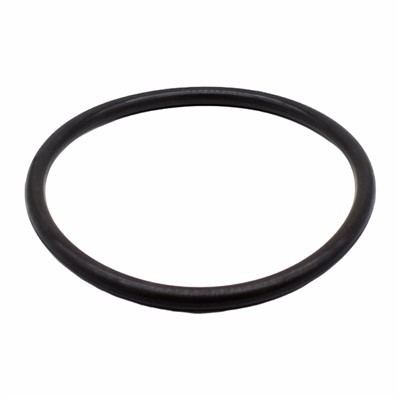
If you’re dealing with seal failures in an extreme environment—whether it’s temperature, pressure, contamination, or anything else that’s wearing your equipment down—reach out to us to discuss your needs. We’ll work with you to find a solution that fits, no shortcuts, no overpriced generic products, just seals that work when you need them most.
HNBR O Ring References
Bauer, F. (2019). Elastomer Materials for Extreme Operating Conditions. Tribology Transactions, 62(3), 456-468.
Smith, J. D. (2021). Extrusion Resistance of Oil Seals Under High Pressure. Journal of Mechanical Design, 143(7), 071703.
Alberta Mining Association. (2022). Seal Performance in Cold Remote Industrial Environments. Annual Technical Report.
International Organization for Standardization. (2020). ISO 6194: Rubber Lip Type Oil Seals – Specifications and Test Methods.
Petrochemical and Natural Gas Suppliers Association. (2021). Sealing Solutions for Harsh Subsea Operations. Technical Bulletin 12-21.
Haining Chaoyue Seals Co., Ltd.
As one of the most professional oil seal manufacturers and suppliers in China, we offer a wide range of products with superior quality. Please feel free to wholesale high quality oil seal made in China here from our factory. Also, custom service is available.
Address: Building 9, 158 Lianhong Road, Yuanhua Town, Jiaxing, Zhejiang, China.
E-mail: chaoyue@cyseals.com
WebSite: https://www.hncyseal.com/
