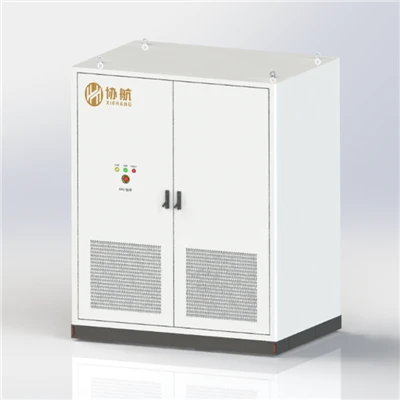
As a supplier in the C&I (Commercial and Industrial) energy storage sector, I’ve witnessed firsthand the critical importance of safety features in these systems. C&I energy storage solutions play a pivotal role in modern energy management, offering businesses the ability to store excess energy, reduce peak demand charges, and enhance grid resilience. However, with the high – energy density and complex electrical components involved, safety is non – negotiable. C&I Energy Storage
Battery Management System (BMS)
One of the fundamental safety features in C&I energy storage systems is the Battery Management System (BMS). The BMS acts as the brain of the battery pack, constantly monitoring and managing the state of each individual battery cell. It measures parameters such as voltage, temperature, and state of charge (SOC) for every cell.
For instance, if a single cell in a large battery pack starts to overheat or shows an abnormal voltage, the BMS can take immediate action. It can isolate the faulty cell, preventing the issue from spreading to other cells and potentially causing a thermal runaway. Thermal runaway is a dangerous situation where an increase in temperature leads to a self – sustaining reaction that can result in a fire or explosion.
The BMS also ensures that the battery is charged and discharged within safe limits. Overcharging can cause the battery to degrade faster and may lead to safety hazards, while undercharging can reduce the battery’s capacity and performance. By precisely controlling the charging and discharging processes, the BMS extends the battery’s lifespan and maintains its safety.
Thermal Management Systems
Thermal management is another crucial aspect of C&I energy storage safety. Batteries generate heat during charging and discharging cycles, and if this heat is not properly dissipated, it can lead to overheating and reduced battery performance.
There are two main types of thermal management systems: air – cooled and liquid – cooled. Air – cooled systems use fans to circulate air around the battery pack, removing heat. They are relatively simple and cost – effective, making them suitable for smaller C&I energy storage systems.
On the other hand, liquid – cooled systems are more efficient at heat dissipation. They use a coolant, usually a mixture of water and glycol, to absorb heat from the battery cells. The coolant is then circulated through a heat exchanger, where the heat is transferred to the outside environment. Liquid – cooled systems are often used in larger C&I installations where high – power density and precise temperature control are required.
By maintaining the battery at an optimal temperature range, thermal management systems not only enhance safety but also improve the battery’s efficiency and longevity. For example, lithium – ion batteries perform best within a temperature range of 20 – 40°C. Outside this range, their performance can degrade significantly, and the risk of safety issues increases.
Fire Suppression Systems
In the event of a battery fire, having an effective fire suppression system is essential. C&I energy storage systems are typically equipped with fire suppression mechanisms that are designed to quickly detect and extinguish fires.
One common type of fire suppression system uses clean agents such as FM – 200 or Novec 1230. These agents are non – conductive, non – corrosive, and leave no residue after discharge. When a fire is detected, the system releases the clean agent into the battery enclosure, suppressing the fire by removing heat and interrupting the chemical reaction.
Another approach is the use of water – based fire suppression systems. These systems can be effective in cooling the battery pack and extinguishing the fire. However, water is conductive, so special care must be taken to ensure that the electrical components are isolated to prevent electrical short – circuits.
Fire suppression systems are often integrated with the overall energy storage system, so they can be triggered automatically if a temperature or smoke sensor detects a potential fire hazard.
Electrical Safety Features
Electrical safety is of utmost importance in C&I energy storage systems. These systems involve high – voltage and high – current electrical circuits, which can pose significant risks if not properly managed.
Overcurrent protection devices, such as fuses and circuit breakers, are installed to prevent excessive current from flowing through the system. If a short – circuit or overload occurs, the overcurrent protection device will trip, cutting off the electrical supply and preventing damage to the equipment and potential safety hazards.
Ground fault protection systems are also used to detect and prevent electrical leakage to the ground. A ground fault can occur if there is a break in the insulation of an electrical conductor, allowing current to flow to the ground. Ground fault protection devices can quickly detect this abnormal current flow and disconnect the circuit to prevent electric shock and other safety issues.
In addition, isolation switches are installed to allow for safe maintenance and servicing of the energy storage system. These switches can be used to disconnect the system from the electrical grid and other power sources, ensuring that technicians can work on the system without the risk of electrical shock.
Monitoring and Alarm Systems
Continuous monitoring and early warning systems are vital for the safety of C&I energy storage systems. These systems use a network of sensors to collect data on various parameters such as temperature, voltage, current, and pressure. The data is then transmitted to a central monitoring station, where it can be analyzed in real – time.
If any of the monitored parameters exceed the pre – set safety limits, the monitoring system will trigger an alarm. The alarm can be sent to the system operator via email, SMS, or a dedicated monitoring platform. This allows the operator to take immediate action, such as shutting down the system or dispatching maintenance personnel to investigate the issue.
Remote monitoring also enables predictive maintenance. By analyzing historical data, the monitoring system can identify trends and potential issues before they become serious problems. For example, if the temperature of a particular battery cell is gradually increasing over time, it may indicate a developing fault. The operator can then take preventive measures, such as replacing the faulty cell, to avoid a more significant safety incident.
Enclosure and Structural Safety
The enclosure of a C&I energy storage system provides physical protection for the battery and electrical components. It is designed to withstand environmental factors such as dust, moisture, and impact.
Enclosures are often made of robust materials such as steel or aluminum, which can resist corrosion and mechanical damage. They are also sealed to prevent the ingress of dust and water, which can cause electrical short – circuits and other safety issues.
In addition, the structural design of the energy storage system takes into account factors such as seismic resistance and wind loading. In areas prone to earthquakes or strong winds, the system must be able to withstand the forces without damage. The structural integrity of the system is essential for ensuring the long – term safety and reliability of the energy storage installation.
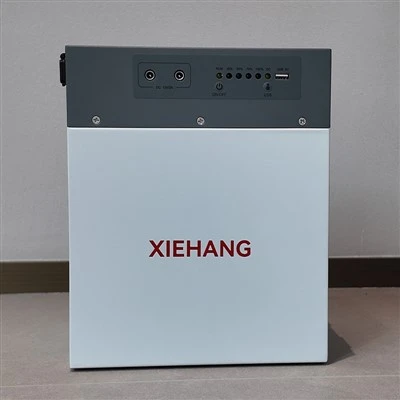
Portable Power Station In conclusion, the safety features in C&I energy storage systems are comprehensive and multi – faceted, encompassing battery management, thermal control, fire suppression, electrical protection, monitoring, and enclosure design. As a supplier, we are committed to providing the highest level of safety in our products. If you are considering a C&I energy storage solution for your business, we invite you to contact us to discuss your specific requirements and explore how our safe and reliable energy storage systems can meet your needs.
References
- "Battery Energy Storage System Safety: A Review" by X. Zhang, Y. Li, and X. Chen.
- "Thermal Management of Lithium – Ion Batteries for Electric Vehicles" by J. Wang and H. Liu.
- "Electrical Safety Standards for Energy Storage Systems" published by the Institute of Electrical and Electronics Engineers (IEEE).
Zhejiang Xiehang New Energy Equipment Co., Ltd.
As one of the most professional c&i energy storage manufacturers and suppliers in China, our products have good reputation in the market. Please erst assured to wholesale custom made c&i energy storage from our factory. If you have any enquiry about cooperation, please feel free to email us.
Address: No.5 Hechen Road, Zhouwangmiao Town, Haining, Jiaxing City, Zhejiang Province, China
E-mail: dan.wu@xiehang.net
WebSite: https://www.shineonpower.com/
