Yo, I’m an annealing furnace supplier, and today I wanna chat about the performance indicators of an annealing furnace. These indicators are crucial as they directly affect the quality of the annealing process and the final products. So, let’s dive right in! Annealing Furnace
Temperature Uniformity
One of the most important performance indicators is temperature uniformity. You see, in annealing, getting the right temperature across the entire workspace of the furnace is super key. If the temperature varies too much, some parts of the material being annealed might not reach the optimal state. This can lead to inconsistent material properties, like differences in hardness or ductility.
For example, if you’re annealing a batch of metal sheets, and one part of the furnace is a lot hotter than another, the sheets in the hotter area might end up over – annealed, becoming too soft. Meanwhile, the ones in the cooler spots might be under – annealed, remaining too hard and brittle.
To measure temperature uniformity, we use multiple thermocouples placed at different locations inside the furnace. We then calculate the difference between the maximum and minimum temperatures recorded. A good annealing furnace should have a temperature uniformity within a few degrees Celsius. This is usually achieved through proper insulation, efficient heating elements, and well – designed air circulation systems.
Heating Rate
The heating rate is another big deal. It refers to how quickly the furnace can raise the temperature to the desired annealing level. A fast heating rate can save a lot of time, especially when dealing with large – scale production. But it’s not all about speed.
If you heat the material too quickly, it can cause thermal stress. This stress can lead to cracks or other defects in the material. On the other hand, a very slow heating rate might not be practical for commercial production as it would increase the overall processing time and cost.
As a supplier, we design our annealing furnaces to have a controllable heating rate. We use advanced heating elements and control systems to adjust the rate according to the specific requirements of the material being annealed. For some materials, a slow and steady heating rate of a few degrees per minute might be ideal, while others can tolerate a faster rate of up to 20 degrees per minute.
Cooling Rate
Just as important as the heating rate is the cooling rate. After the material has been held at the annealing temperature for a certain period, it needs to be cooled down. The cooling rate can significantly affect the microstructure and properties of the material.
A rapid cooling rate can sometimes result in a harder and more brittle material. For instance, in some steels, rapid cooling can form martensite, a very hard but brittle phase. On the contrary, a slow cooling rate allows the material to form a more ductile and softer microstructure.
We offer different cooling options in our annealing furnaces. Some models have natural cooling, where the furnace is simply turned off and the material cools down gradually with the surrounding environment. Others have forced – air cooling or even water – cooling systems for more precise control of the cooling rate.
Holding Time
The holding time is the duration for which the material is kept at the annealing temperature. This is important because it allows the atoms in the material to rearrange themselves into a more stable structure. The required holding time depends on several factors, such as the type of material, its thickness, and the desired annealing effect.
For thin materials, a shorter holding time might be sufficient, while thicker materials usually need a longer one. If the holding time is too short, the annealing process might not be complete, and the material won’t achieve the desired properties. Conversely, an overly long holding time can waste energy and might even have a negative impact on the material’s quality.
In our furnaces, we provide programmable controllers that can accurately set and maintain the holding time. This gives our customers the flexibility to optimize the annealing process according to their specific needs.
Energy Efficiency
Energy is a major cost factor in any industrial process, and annealing is no exception. An energy – efficient annealing furnace can save a significant amount of money in the long run.
We design our furnaces with several energy – saving features. For example, we use high – quality insulation materials to minimize heat loss. This means that less energy is needed to maintain the desired temperature inside the furnace. Our heating elements are also designed to be highly efficient, converting a large proportion of the electrical energy into heat.
Moreover, we incorporate advanced control systems that can adjust the power input based on the actual temperature requirements. This prevents over – heating and ensures that the furnace operates at the most energy – efficient level possible.
Furnace Loading Capacity
The furnace loading capacity is the maximum amount of material that can be annealed in one batch. This is an important consideration, especially for large – scale production. A larger loading capacity means fewer batches are needed to process a given amount of material, which can increase productivity.
However, it’s not just about fitting as much material as possible into the furnace. The loading design also needs to ensure good temperature uniformity and air circulation. If the furnace is overloaded, it can lead to uneven heating and cooling, which affects the quality of the annealed products.
We offer a range of annealing furnaces with different loading capacities to meet the needs of various industries. Whether you’re a small – scale workshop or a large manufacturing plant, we have a furnace that can suit your production volume.
Control System Precision
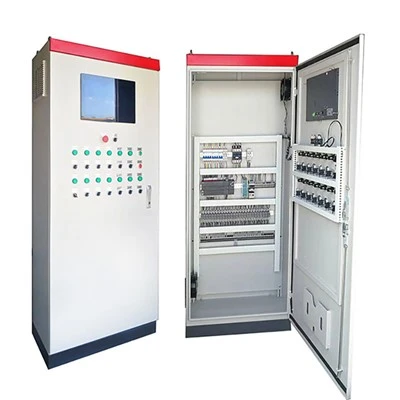
The control system precision is what allows us to accurately set and maintain all the performance indicators I’ve mentioned so far. A good control system can measure and adjust the temperature, heating rate, cooling rate, and holding time with high precision.
Our furnaces are equipped with state – of – the – art control systems. These systems use advanced sensors to continuously monitor the internal conditions of the furnace. They can then make real – time adjustments to ensure that the annealing process is carried out exactly as planned.
For example, if the temperature starts to deviate from the set value, the control system can immediately adjust the power supplied to the heating elements to bring it back to the desired level. This high – level of precision ensures consistent product quality from batch to batch.
In conclusion, these performance indicators are all interconnected and play a vital role in the effectiveness of an annealing furnace. As an annealing furnace supplier, we’re constantly working on improving these indicators to provide our customers with the best – performing furnaces.
Electric Furnace If you’re in the market for an annealing furnace and want to learn more about how our products can meet your specific needs, don’t hesitate to reach out. We’re here to have a chat, discuss your requirements, and see if we can find the perfect annealing furnace solution for you.
References
- ASM Handbook Committee, "Volume 4: Heat Treating", ASM International
- Incropera, F. P., & DeWitt, D. P., "Fundamentals of Heat and Mass Transfer", Wiley
Danyang Dingfeng Industrial Furnace Co., Ltd.
Danyang Dingfeng Industrial Furnace Co., Ltd. is one of the most experienced annealing furnace manufacturers and suppliers in China, also supports customized service with low price. Please feel free to wholesale high quality annealing furnace made in China here from our factory. For pricelist, contact us now.
Address: Lizhuang Economic Development Zone, Danyang City
E-mail: saleszk@dffurnace.com
WebSite: https://www.dffurnace.com/
