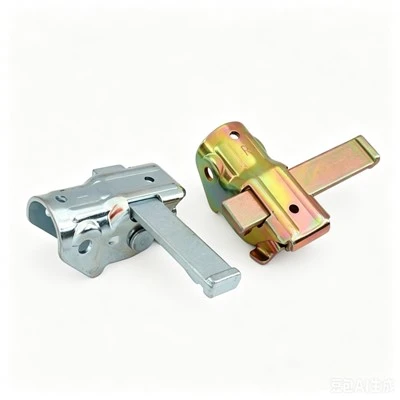
If you’ve ever spent time on a construction site—whether as an engineer, a foreman, or a part-time helper—you know that alignment formwork clamps aren’t just small metal tools. They’re the unsung heroes of concrete work, the parts that keep walls straight, slabs level, and entire structures from shifting mid-pour. As someone who’s been supplying these clamps for over a decade, I’ve seen firsthand how even the smallest misstep in transporting them can turn a profitable job into a costly headache. Today, I want to break down exactly what transportation requirements for these clamps are, why they matter, and how ignoring them can derail your project. Let’s cut through the industry jargon and talk real-world stuff that actually works. Alignment Formwork Clamp

First, let’s ground this in what alignment formwork clamps do. Unlike generic clamps that hold random pieces together, alignment formwork clamps are precision-made to lock formwork panels—usually plywood, steel, or aluminum—into tight, consistent alignment before concrete is poured. A single clamp out of spec, bent during transport, or covered in leftover concrete can throw off a 10-foot wall by an eighth of an inch, which might not sound like much until you’re fixing a misaligned foundation that’s already half-poured. That’s why transportation for these clamps isn’t just “loading them up and driving” — it’s a series of specific requirements tailored to their design, material, and end use.
Let’s start with the physical characteristics of the clamps themselves that drive transport rules. Most alignment formwork clamps are made from high-tensile steel or lightweight aluminum, with threaded rods, locking nuts, and sometimes rubber pads to prevent scratching formwork surfaces. Steel clamps are heavier—we make a standard 12-inch steel clamp that weighs 1.2 pounds each, so a crate of 500 is 600 pounds, enough to strain a standard pickup bed if loaded wrong. Aluminum clamps are lighter, but their soft metal parts are way more prone to dents and scratches that ruin their precision fit. Then there’s the size: alignment formwork clamps come in lengths from 6 inches to 36 inches, with protruding threaded rods that stick out 2 or 3 inches beyond the main clamp body. Those rods are sharp and can poke through cardboard, tear tarps, or even injure someone if they’re not secured. I learned this the hard way early in my career—our first big out-of-state delivery was a load of 1,000 24-inch steel clamps, stacked haphazardly in a flatbed, and half the boxes came back with bent rods. We had to replace every damaged clamp, and the client lost three days of work because they didn’t have the right tools. That mistake taught me that the first non-negotiable transport requirement is proper securing of protruding parts.
Next, weight distribution and packaging. Alignment formwork clamps are often shipped in bulk, either in corrugated boxes for small orders or wooden crates for large, project-sized orders. But not all packaging is the same. For steel clamps, which are dense, corrugated boxes need to be at least 32 ECT (edge crush test) rated to support the weight of stacked boxes—stacking a 50-pound box of steel clamps on a 20-pound box will cause the bottom box to collapse, bending clamps and spilling parts. Aluminum clamps, by contrast, are better suited for slightly lighter ECT boxes, but they need individual dividers or foam inserts in boxes to prevent them from rubbing against each other during transport. I’ve also seen clients reuse old packaging from other tools—don’t do that. The wooden crates that hold power tools or drywall anchors aren’t built to handle the consistent vibration of a delivery truck on a highway. We design our custom crates for bulk clamp orders with internal bracing that holds each clamp in a specific slot, so they don’t slide around. Weight distribution on the truck is another big one. We recommend that no more than 1,500 pounds of alignment clamps be placed on a single pallet, and that pallets are arranged so the heaviest pallets are at the bottom of the load, directly on the truck’s floor rails. Top-heavy loads shift during turns or sudden stops, which can damage clamps or even cause a truck to tip—something no one wants to deal with on a construction site.
Then there’s environmental protection during transport. Construction sites are dirty, but the transport process shouldn’t be what gets your clamps dirty. Alignment formwork clamps that are coated with a rust-inhibiting oil (our standard coating for steel clamps) will corrode if they’re exposed to rain, snow, or road salt during transport. Road salt is a huge one—delivery trucks that take rural roads in winter or early spring will kick up salt that sticks to clamps, eats through the oil coating, and causes rust that makes the clamps hard to adjust or impossible to lock properly. For that reason, all bulk clamp loads must be covered with a heavy-duty, UV-resistant tarp that’s secured tightly with cam straps—not rope, which can fray and come loose mid-drive. Even for short hauls between a local warehouse and a job site, I always recommend covering the load, because a sudden 10-minute rainstorm can ruin an entire pallet of clamps. For aluminum clamps, environmental protection goes beyond moisture—aluminum is prone to scratching, so the packaging should have a thin, low-density polyethylene layer between each clamp, or the entire pallet should be wrapped in stretch film to prevent clamps from rubbing against each other. I once worked with a framing crew that ordered aluminum clamps for a high-rise apartment project, and when the shipment arrived, half the clamps had deep scratches from being stacked directly on top of each other. We had to rush a replacement shipment overnight, which cost us extra in shipping and made the project manager frustrated—all because of skipped environmental transport steps.
Another often-overlooked requirement is labeling and inventory tracking, especially for large projects. Alignment formwork clamps aren’t a one-size-fits-all product—they come in different lengths, thread sizes, and locking mechanisms, and mixing them up on a job site is a nightmare. During transport, every crate or pallet should have a clear, weatherproof label that lists the clamp type, quantity, and part number, along with the project name. For clients ordering 5,000 clamps or more, we also include a packing slip inside each crate, so they can do a quick inventory check once the shipment arrives without opening every box. I’ve had clients tell me that they once received a shipment of clamps where the labels were smudged from rain, and they ended up with 2,000 12-inch clamps when they needed 2,000 18-inch ones—wasting a day of coordination time to swap them out. Labeling isn’t just a transport requirement for the supplier; it’s a way to make sure the job stays on track once the clamps arrive.
Wait, I should also talk about special transport considerations for customized alignment formwork clamps. A lot of our clients order custom clamps for unique projects—like curved walls, irregularly shaped concrete footings, or high-stress bridge supports. These custom clamps are often larger, heavier, or have non-standard dimensions, so their transport needs are different. For example, a custom clamp for a curved wall might have a 4-foot curved arm, which would get crushed if stacked on top of other pallets. We require custom clamp shipments to be labeled as “non-stackable” and loaded on the top level of the truck, away from other loads. For ultra-heavy custom clamps (some of our bridge-grade clamps weigh 10 pounds each), we use wooden crates with steel corner supports and double-stack pallets, with forklift loading at both the warehouse and the job site—you can’t just drop a 1,000-pound crate of custom clamps onto the ground, that would bend or crack the clamps. I recently supplied a set of custom clamps for a pedestrian bridge in the Pacific Northwest, and the transport crew almost stacked the custom crates with standard clamps until our logistics team caught it. That small mistake would have ruined a $50,000 custom set of clamps, and pushed the bridge project back by a week—all because of not accounting for specialized transport needs.
Let’s also address what happens when these requirements aren’t met, because I’ve seen it too many times. Last year, we had a client in Texas who ordered 3,000 steel alignment clamps for a commercial parking garage project. Their in-house delivery team loaded the clamps into an open flatbed, didn’t cover them, and took a route that exposed the load to rain and road salt. By the time the shipment arrived at the job site, 1,200 clamps had surface rust and bent rods. The client had to delay the concrete pour for two days while they waited for a replacement shipment, costing them an estimated $15,000 in labor fees for the crew standing around. That’s the kind of cost that can make or break a small construction job, and it all stems from skipping basic transport requirements for alignment formwork clamps. The worst part? It could have been easily avoided with proper packaging, securing, and covering of the load.
So, if you’re a contractor, project manager, or someone who orders alignment formwork clamps for your job, what does this mean for you? You don’t have to be a logistics expert, but you should communicate your transport needs clearly with your supplier. Ask about how they package clamps, what weight limits they use for pallets, and whether they provide covered transport. And if you’re arranging your own delivery, make sure to follow the same rules: secure protruding parts, distribute weight evenly, protect from the elements, and label everything clearly. As a supplier, we don’t just sell clamps—we sell a solution that keeps concrete projects aligned and on time, and that starts with making sure the clamps arrive at the job site exactly as they left our warehouse: precise, undamaged, and ready to use.
If you’re currently planning a concrete formwork project and need alignment formwork clamps that meet all transport and performance standards, don’t hesitate to reach out to discuss your specific requirements. Our team has years of experience working with contractors on projects of all sizes, from small residential builds to large commercial and industrial projects, and we can help you select the right clamps and arrange for transport that gets them to you on time and in perfect condition.
Formworks References
- Construction Formwork Safety and Transportation Guidelines, Occupational Safety and Health Administration (OSHA), 2021
- Steel Clamp Packaging and Transport Standards, American Society of Civil Engineers (ASCE), 2019
- Aluminum Formwork Component Durability During Transit, National Association of Construction Manufacturers (NACM), 2020
- Heavy Construction Equipment Transport Best Practices, Federal Motor Carrier Safety Administration (FMCSA), 2022
Rizhao Wellfit Scafform Co., Ltd.
Address: No. 7, Huasheng Road, Taoluo Town Industrial Zoon, Donggang District, Rizhao City
E-mail: sales@wfscafform.com
WebSite: https://www.wfscafform.com/
